
Trump's Large Public Events Could Pose New Security Challenges
· Telemundo McAllen (KTLM)
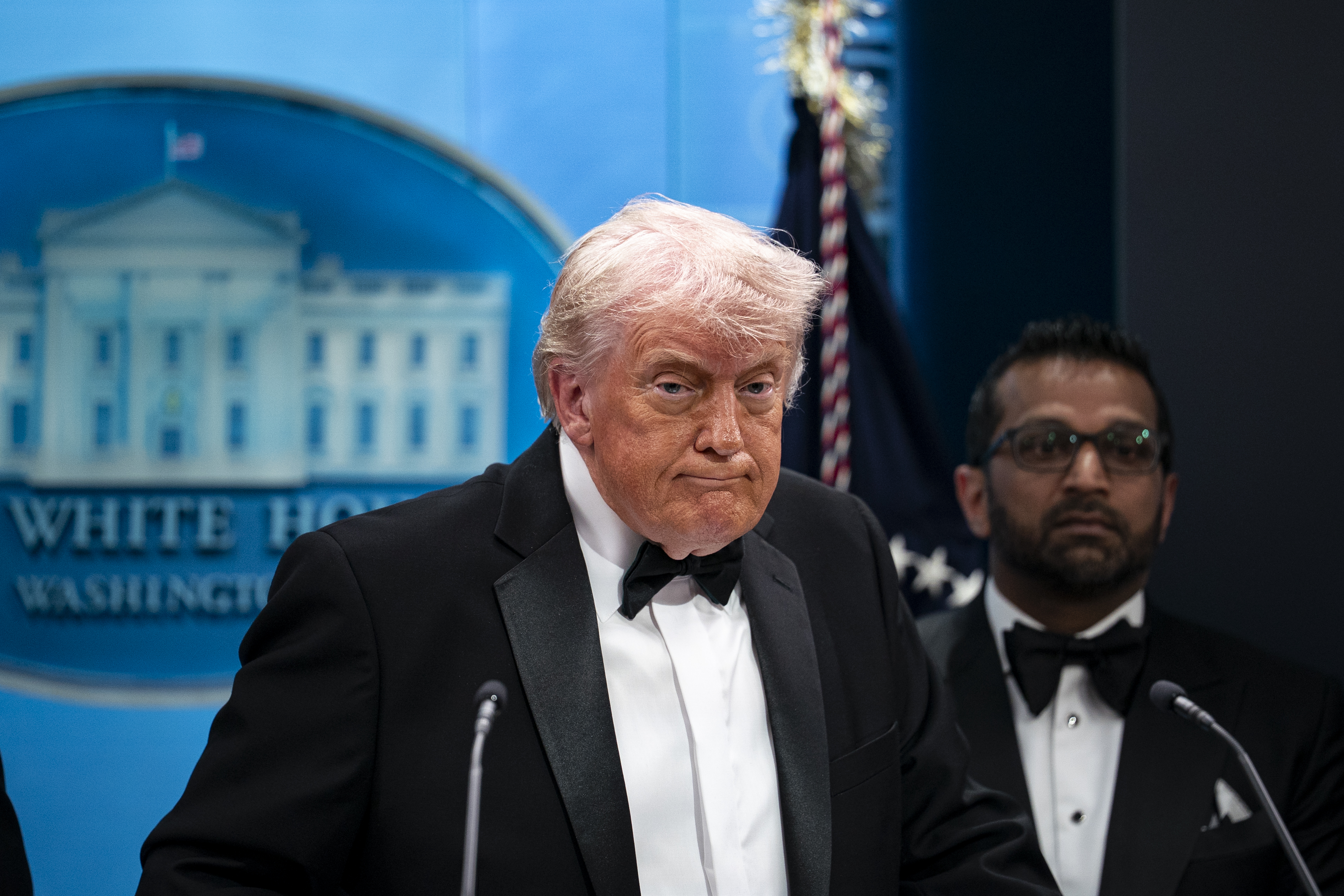
WASHINGTON D.C. – Federal authorities are assessing how to proceed with several high-profile public events involving President Donald Trump following an attack at the White House Correspondents' Dinner. The third violent incident near Trump in less than two years reignites the primary tension facing the president's security team: balancing the public demands of the presidency with minimizing the risk of an attack. Saturday's incident, where a man armed with guns and knives attempted to breach the ballroom of a Washington hotel where Trump was scheduled to address the White House Correspondents' Association, comes ahead of Trump's participation in a series of unusual, large-scale events in the coming months. These include commemorating the nation's 250th anniversary, overseeing the U.S.'s co-hosting of the World Cup, and leading rallies to mobilize Republican support for the upcoming midterm elections in November. A source familiar with the matter indicated that the U.S. Secret Service is already reevaluating its security plans for future events. The agency's alert level was already high due to the extraordinary number of threats against Trump—including two consecutive assassination attempts in 2024—and recent events such as the U.S.-Iran war. 'I can't imagine a more dangerous profession,' Trump remarked about the presidency Saturday night from the White House. Within the Secret Service, intelligence and threat assessment teams are also reviewing threats against Trump from recent months. According to the source, who spoke on condition of anonymity due to the sensitive nature of security planning, high-profile attacks could inspire copycat violence. The White House and Buckingham Palace confirmed that the state visit of King Charles and Queen Camilla, scheduled for Monday, will proceed as planned. However, organizing large-scale events further in the future—such as a UFC fight in the White House garden to celebrate Trump's 80th birthday in June, World Cup matches, and an IndyCar race outside the White House—could become more complicated. The inherent tension in presidential protection is evident. Lawmakers, event attendees, and some of Trump's allies criticized the security planning for the Correspondents' Dinner, questioning how the attacker could reserve a hotel room and bring weapons undetected. Texas Republican Representative Michael McCaul, former chairman of the House Homeland Security Committee, suggested that security protocols for Trump and Vice President JD Vance may need adjustments. 'I think the Secret Service should reconsider having the president and vice president together at such events,' McCaul said on CNN's 'State of the Union.' Kari Lake, a former Republican gubernatorial candidate from Arizona chosen by Trump to lead the U.S. Agency for Global Media, complained about not having to show photo ID matching her event ticket upon entering the hotel for the dinner. 'I can't believe how lax the security was,' Lake wrote on X. The Secret Service is only responsible for protecting individuals under its charge, not the event itself, and the agency immediately celebrated its response, earning high-profile praise from Trump himself. 'Our multilayered protection system works,' said Director Sean Curran on Saturday. 'Those guys did a good job last night. They did a really good job,' Trump reiterated Sunday during a CBS News '60 Minutes' interview. Garrett Graff, author of 'Raven Rock: The Story of the U.S. Government's Secret Plan to Save Itself While the Rest of Us Die,' analyzed the multiple security measures surrounding Trump at the dinner, writing: 'It seems the system worked basically as intended, amid the inevitable security trade-offs in a free society.' Retired Secret Service agent Thomas D. Quinn, who helped pioneer the agency's counter-assault teams, posted on X that 'the Secret Service's security plan for the White House Dinner worked and the attacker was stopped.' He added, 'As long as we are a free people in a nation that loves liberty, the Secret Service's responsibilities will remain immense.' More security changes are expected. Ronald Kessler, author of 'In the President's Secret Service: Behind the Scenes with Agents in the Line of Fire and the Presidents They Protect,' said authorities may consider installing bulletproof glass around venues where Trump speaks, both indoors and outdoors, similar to measures taken after the assassination attempt in Butler, Pennsylvania, during the 2024 presidential campaign. Kessler added that attendees will likely face more thorough screenings, exacerbating already lengthy entry lines that can take hours to clear. An example occurred last fall when Trump attended the inaugural men's meeting.